selection of works
Residency at Cetate Arts Danube (Dolj County, Romania)
Organized by the French Institute in Romania, in partnership with Cetate Arts Danube
Project supported by IF Paris and the Hippocrène Foundation
During her residency at Cetate Arts Danube, located on the Barbu Druga estate in southern Romania, on the banks of the Danube, Emma Durovray focused on the formal analogies that can be drawn between the architecture of the place and its natural environment. The Mediterranean-style manor house with balconies and terraces was a country residence and farm in the late 19th and early 20th centuries, then abandoned under the communist regime before being restored and transformed into an art center in the 2000s.
The building's morphology combines references to Italian villas and Art Deco style, opening onto the park and absorbing its light. Emma Durovray's interest focused on the intertwining patterns, foliage, and spirals in the architecture of the resort, and even more so on its threshold spaces—gates, balustrades, doorways—where nature and domesticity meet. In these liminal spaces, the inside and outside reach out to each other and extend into one another. There is no strict, linear separation between the two, but rather vines and volutes through which one space connects to what precedes it and what follows it.
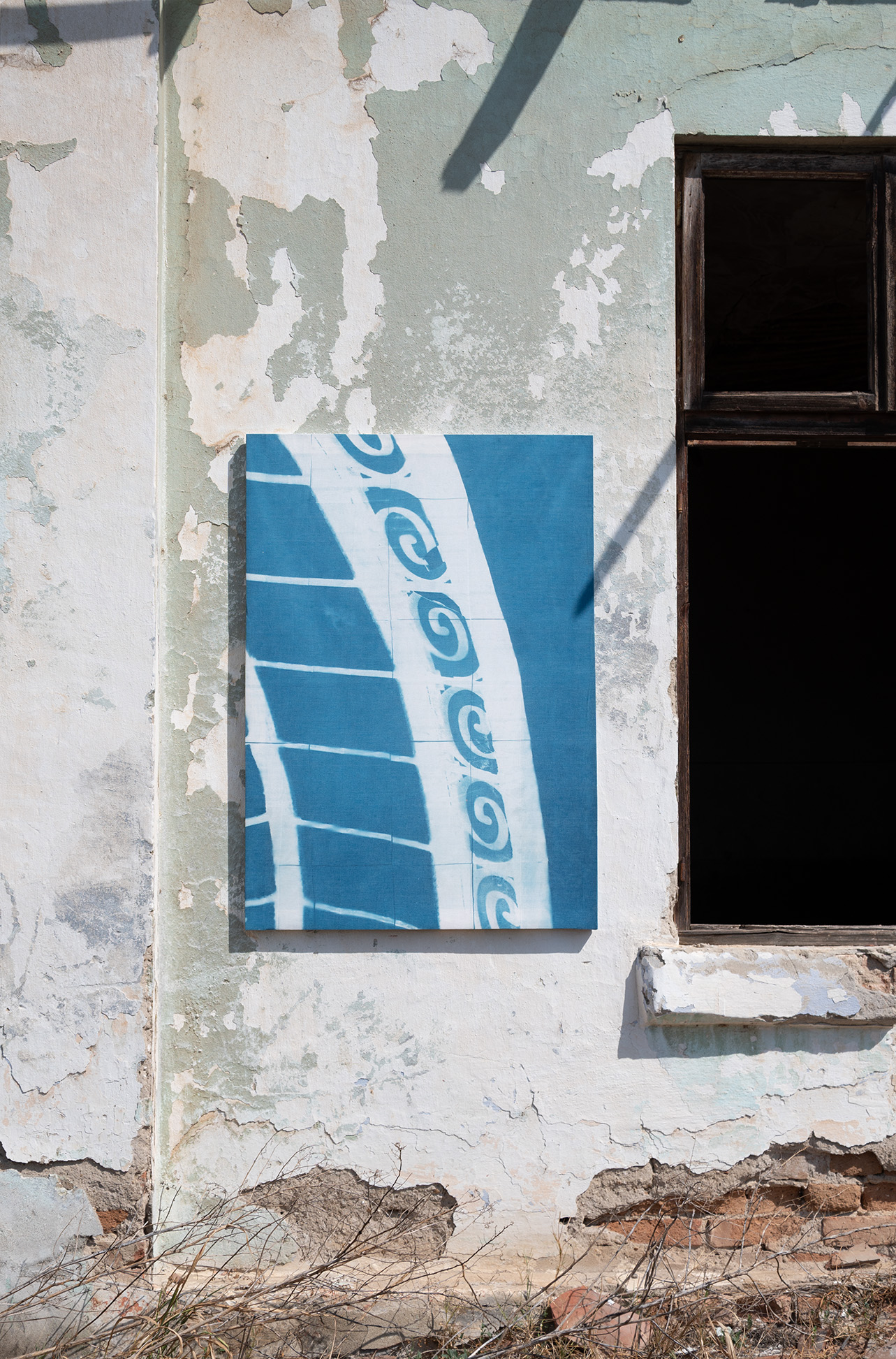
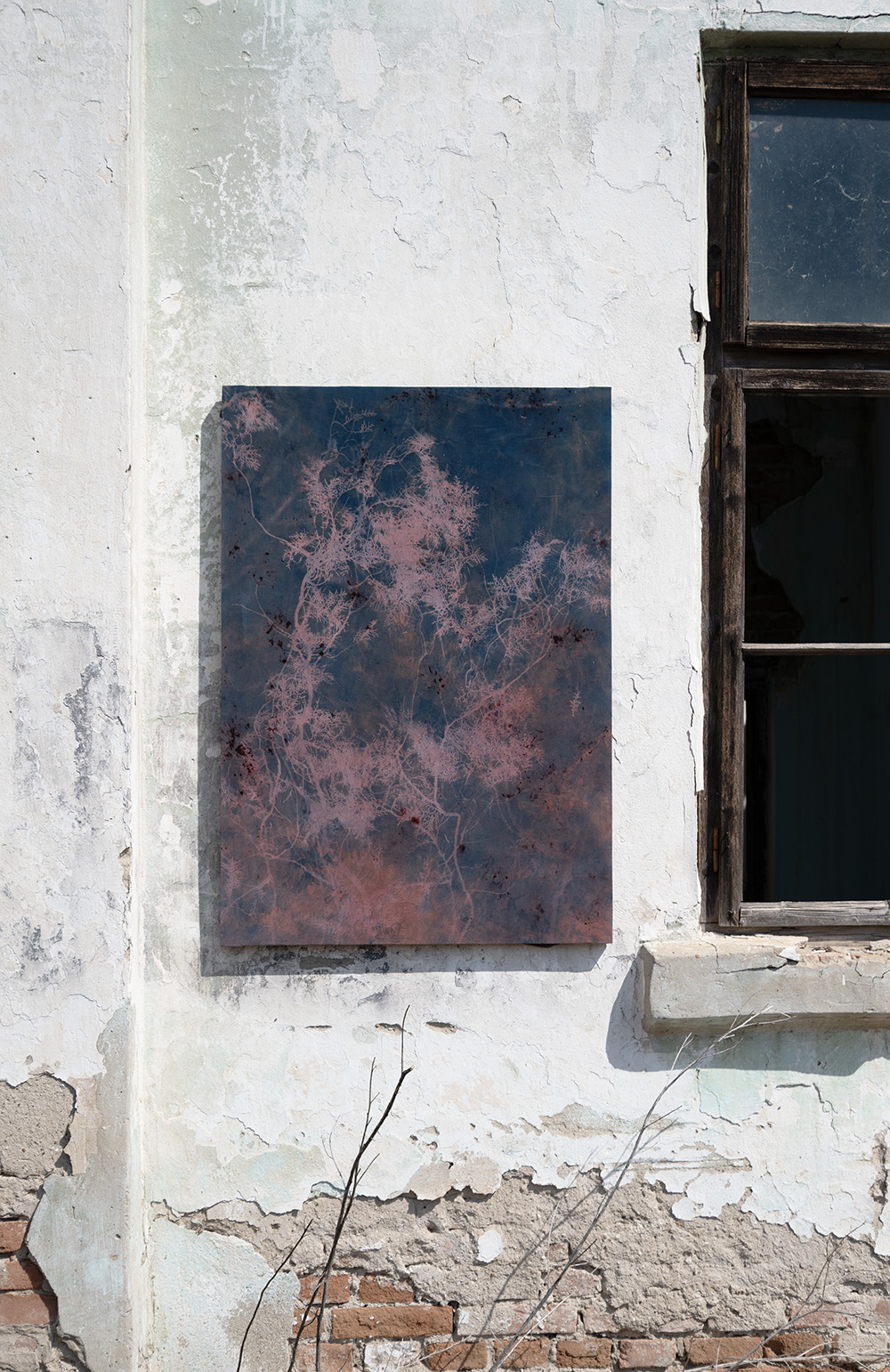
To make these porosities in architecture and nature perceptible, Emma Durovray draws on the cyclical nature of plant life and the shadows cast by ornamentation. Viewed as silent witnesses to human activity, dye plants are collected on site and treated to color fabrics that have been prepared in advance in an alum-based solution.
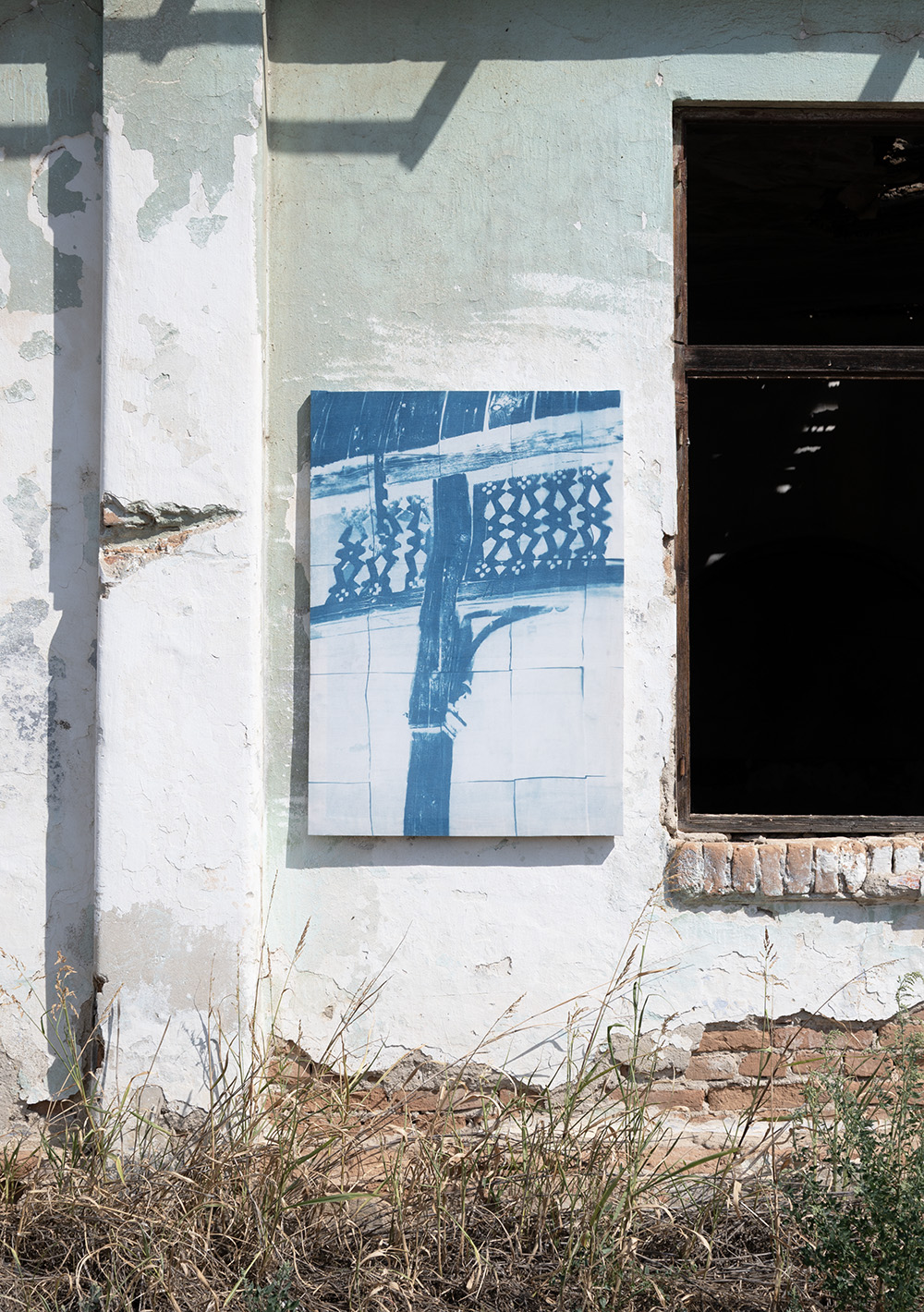
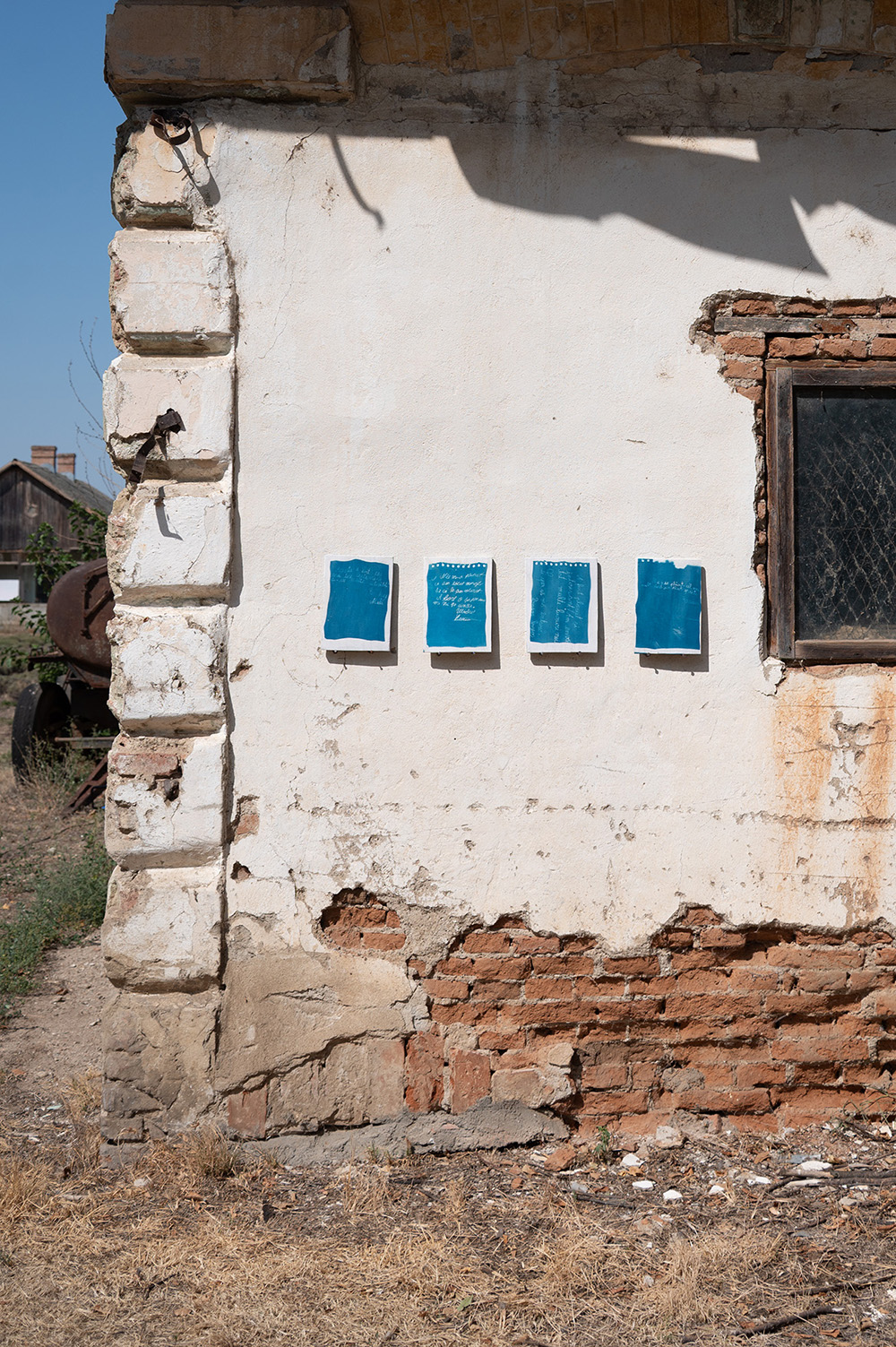
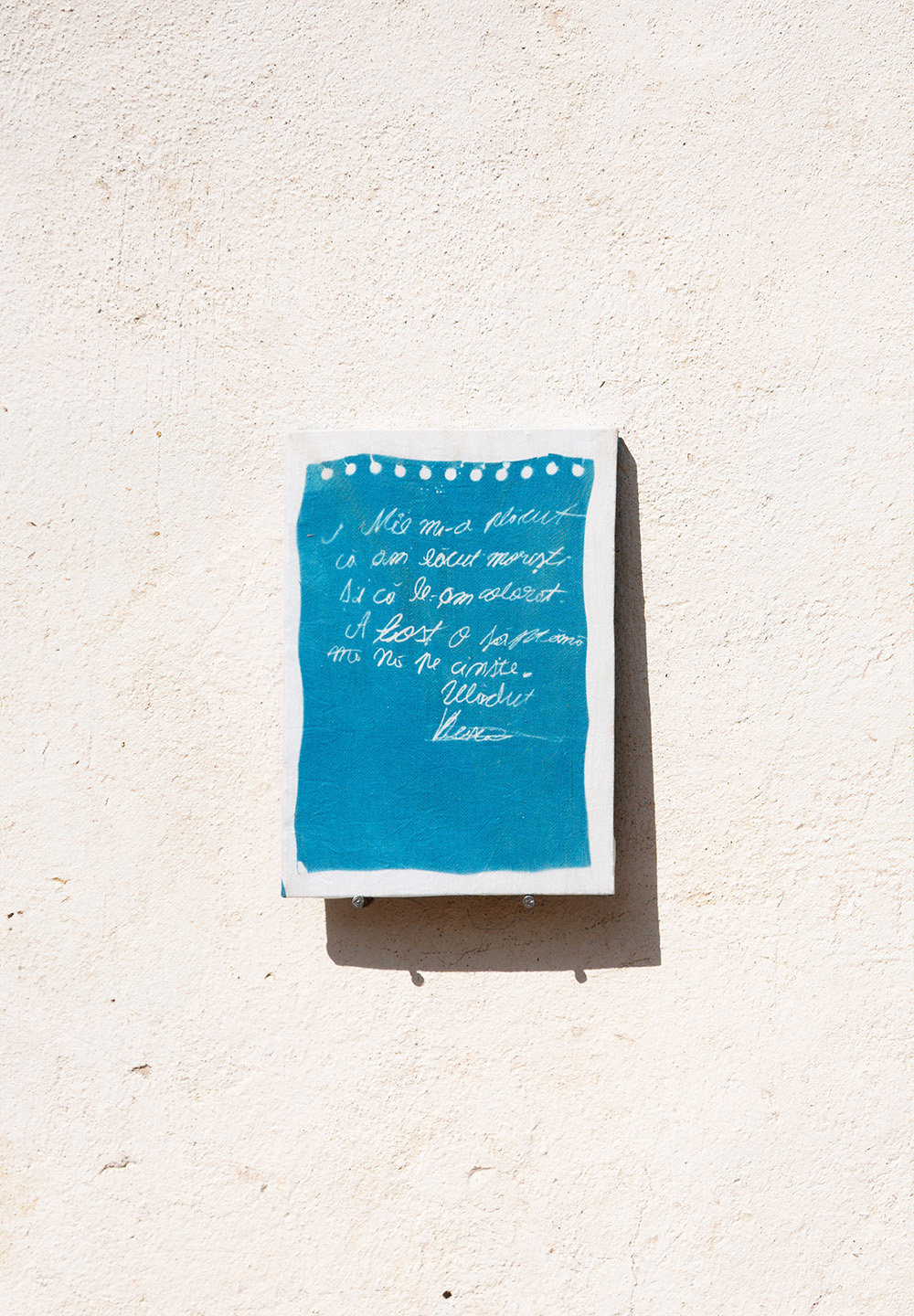
Through the Shadow series, we can see the origin of the ironwork foliage in the trimmed hedges, the spectral presence that precedes everything subject to time. The motifs—both plant and architectural—blend together in compositions fixed in a photosensitive manner using the cyanotype technique. Through this process, the forms are decontextualized, difficult to identify in their origin, and thus acquire a certain anachronicity. The shifting light, the dazzling dimension of the composition, and the vibrant monochrome contribute to the animation of the patterns.
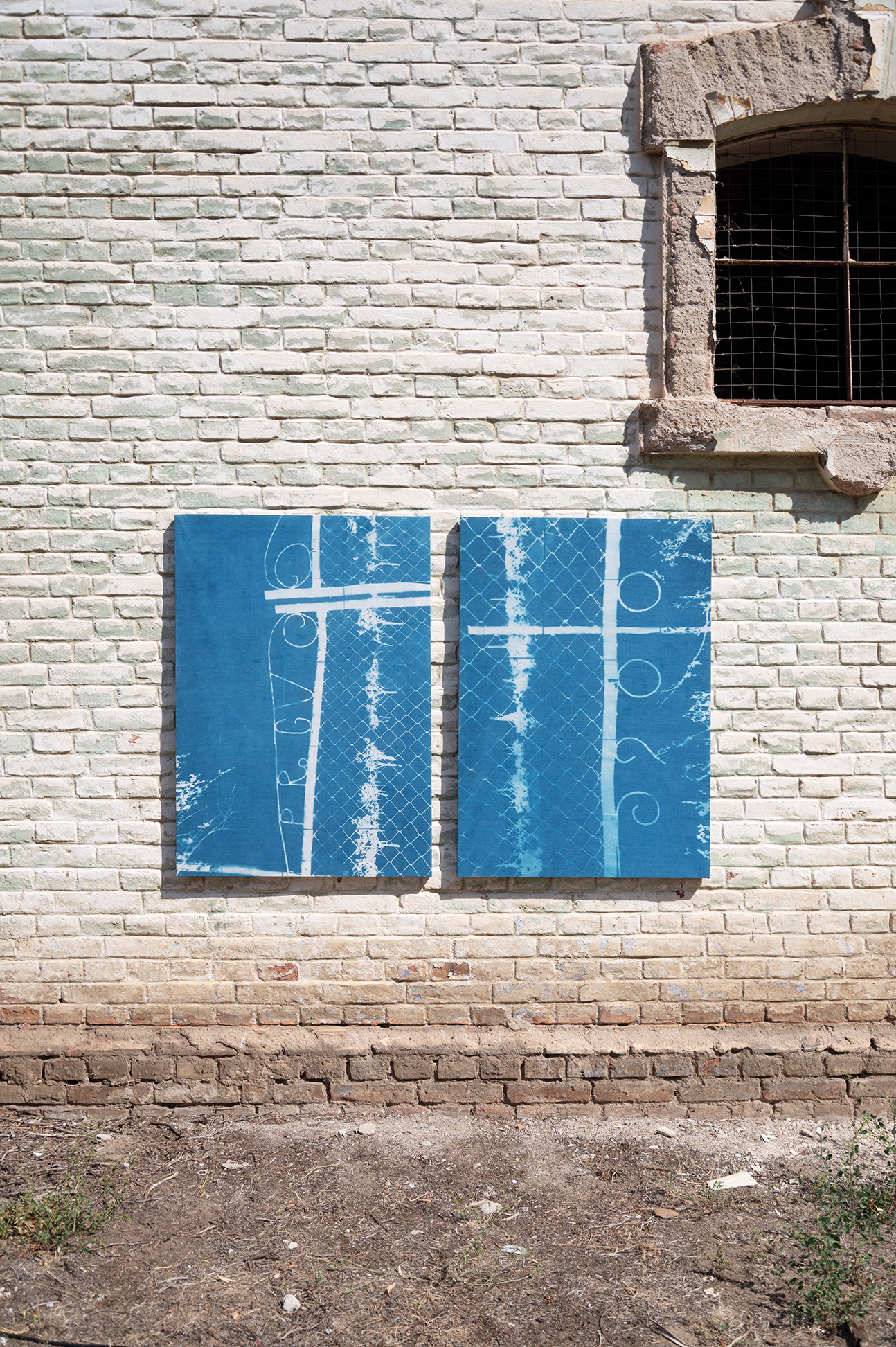
These are both fixed and diluted by natural colors in portrait compositions that give them the status of family members, integrating them on an equal footing with their human counterparts into what is, in the artist's eyes, not so much a herbarium as a photo album. This results in a long-lasting relationship with these images, both in terms of the temporality inherent in their photosensitive revelation on the medium and in their barely revealed fossil-like dimension. In a state of haunting, in deferred states, the plants survive despite their impending disappearance. In turn, their brilliance influences the way in which architecture itself can be perceived as a transitory and fragile archive.
Elora Weill-Engerer