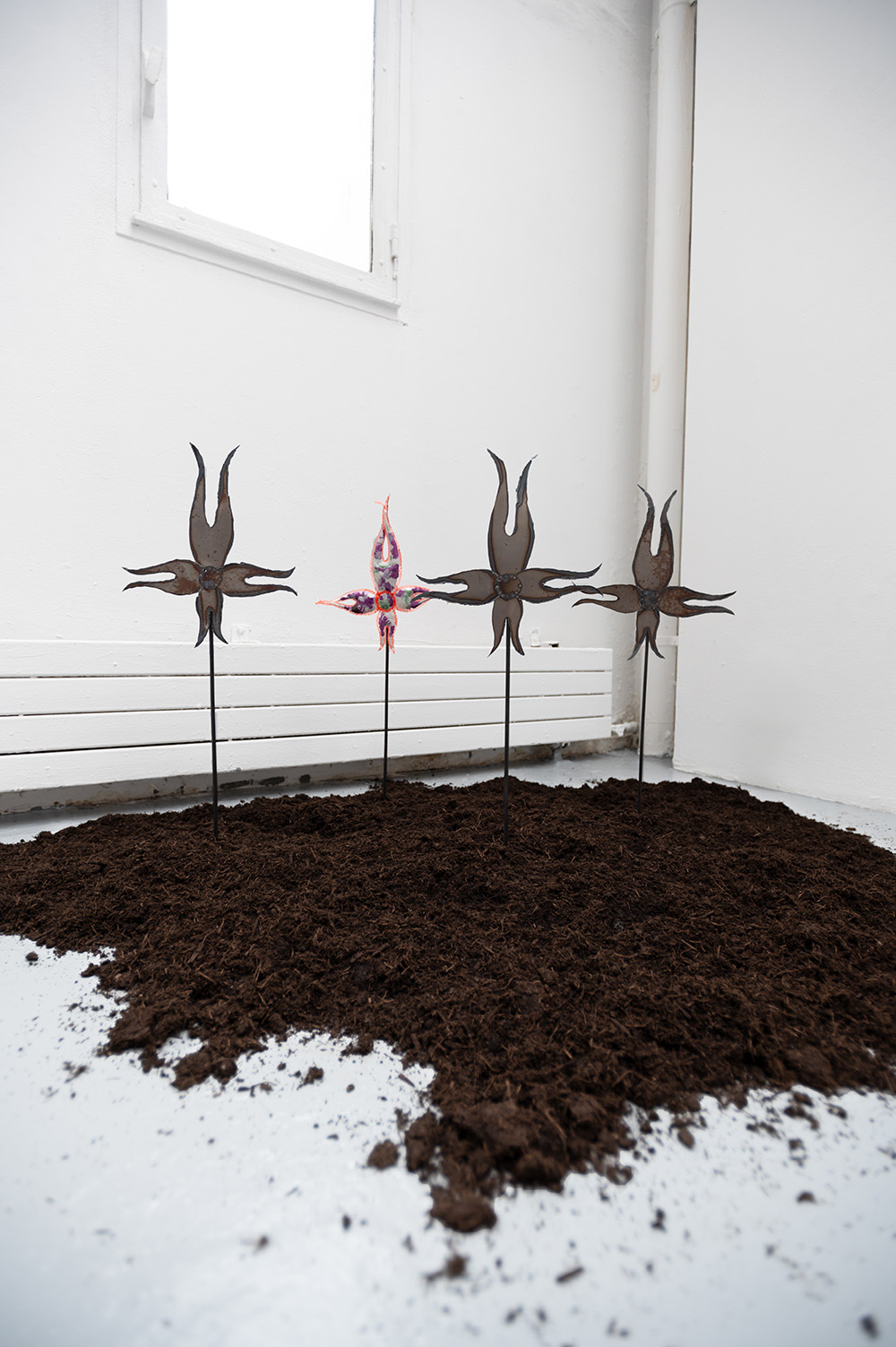
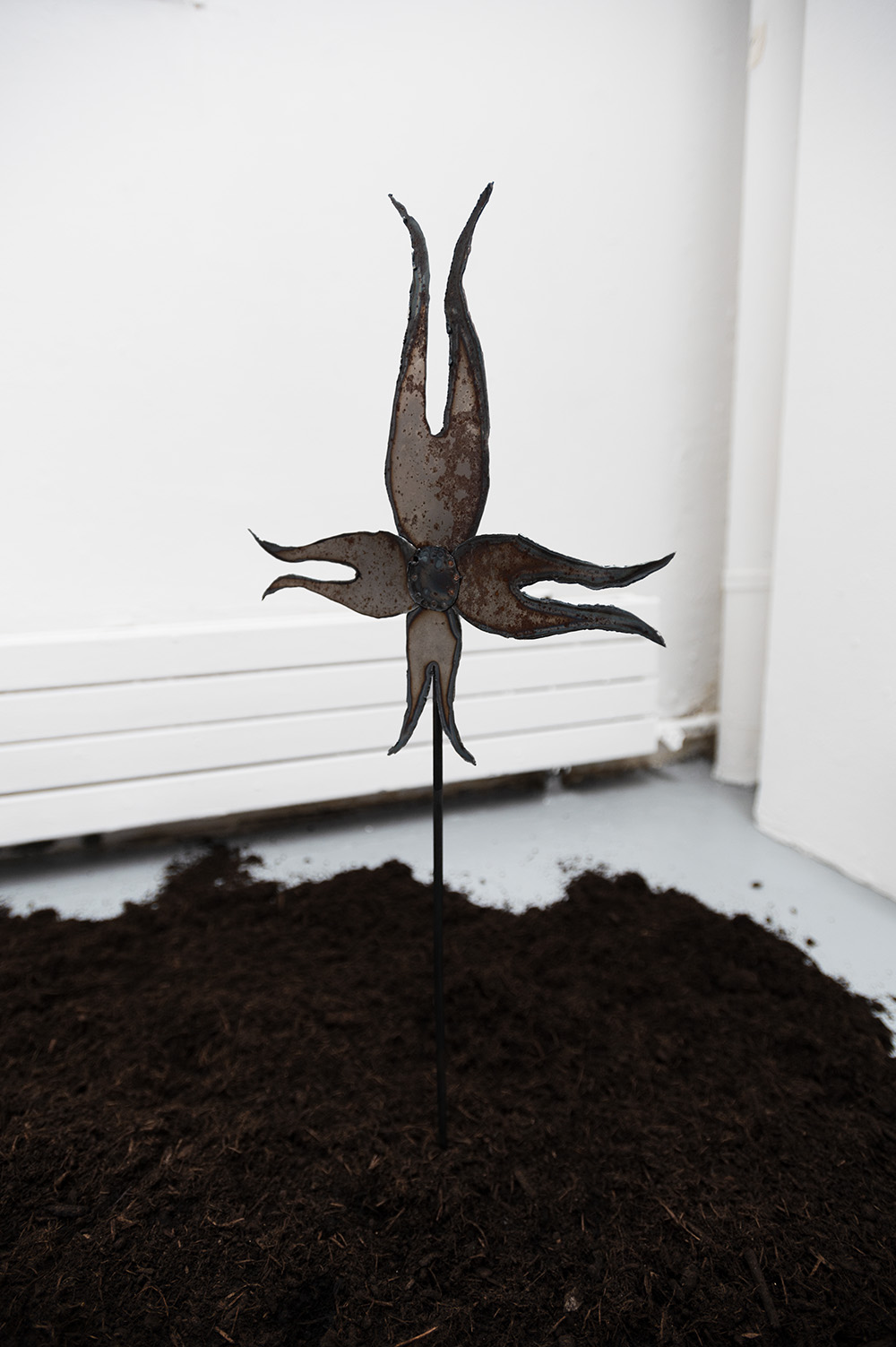
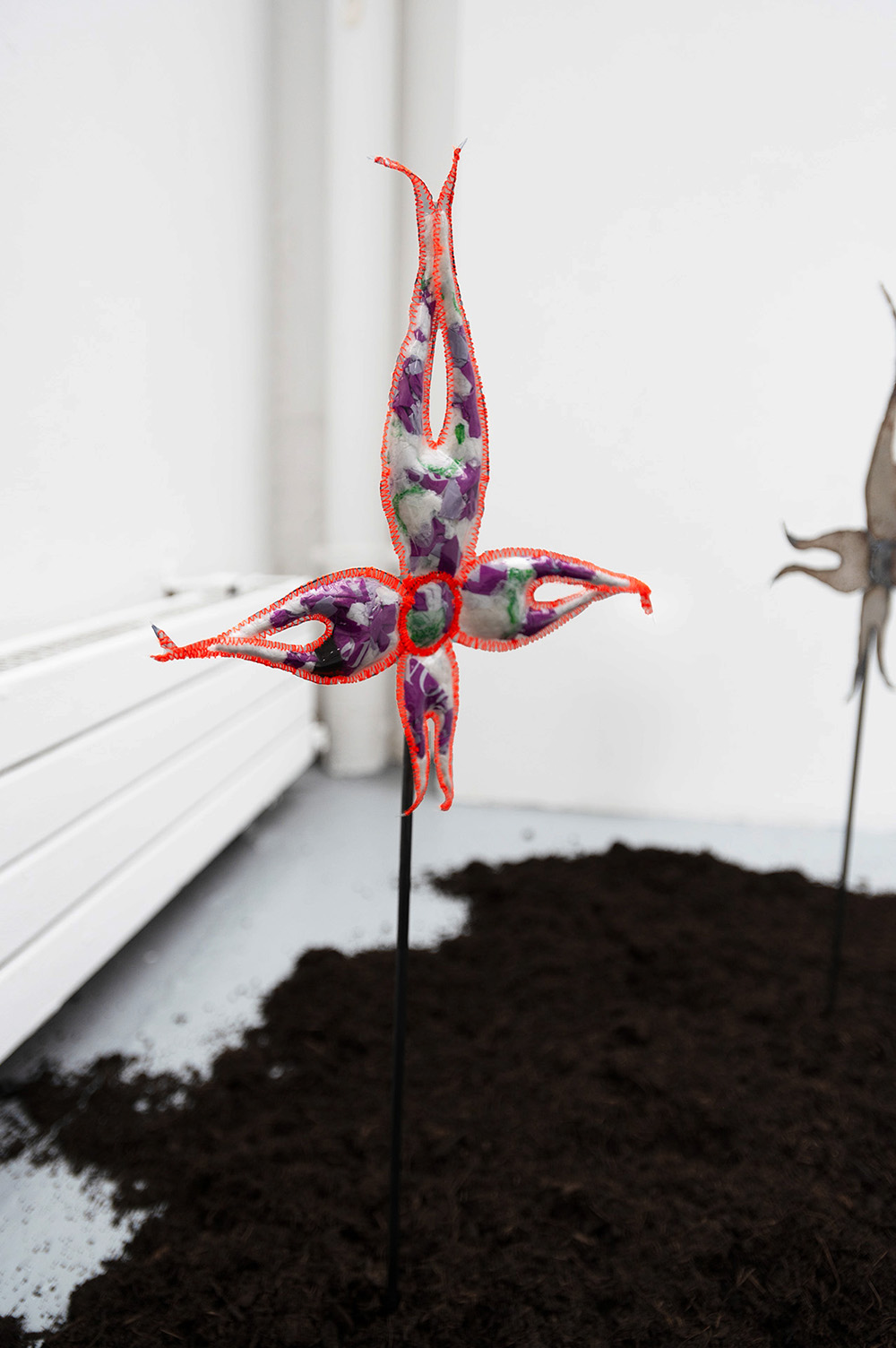
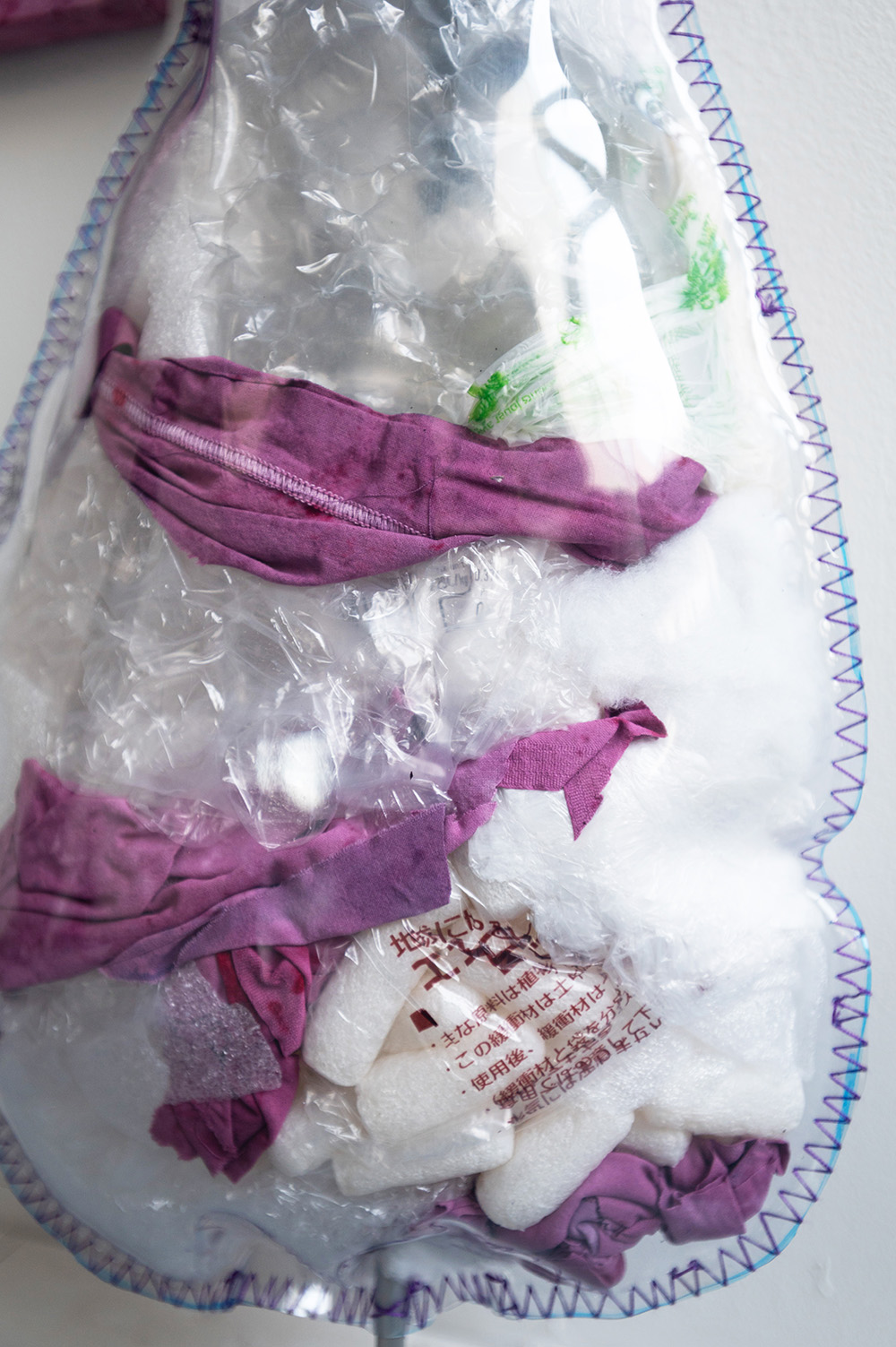
Botanique Plastique depicts an imaginary future in which plants, in order to adapt to an altered environment, have incorporated our waste into their biological structure.
The series is inspired by 'La botanica parralela' (1976), a narrative in which Leo Lionni paints a hyperrealistic picture of a whole new flora, with each plant subject to academic references, stories, anecdotes, and drawings.
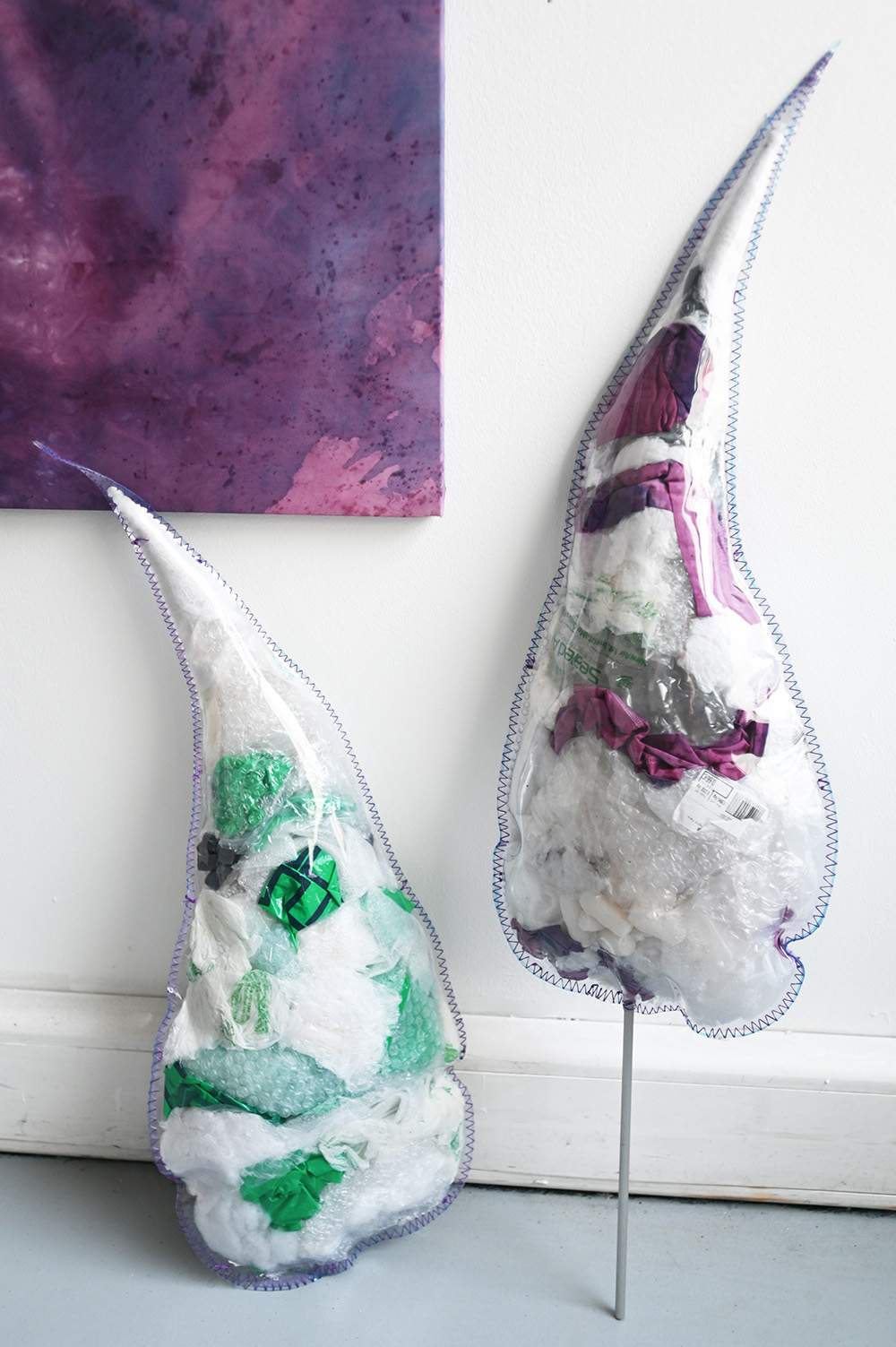
The sculptures in Botanique Plastique draw on the descriptions in this book to reproduce these fantastical plants, adding a flexible PVC structure that allows a glimpse of their internal anatomy made from recycled materials, mainly plastic waste.
Botanique Plastique thus opens a window onto a hypothetical future and invites us to think of our waste as objects, colors, shapes, and materials.
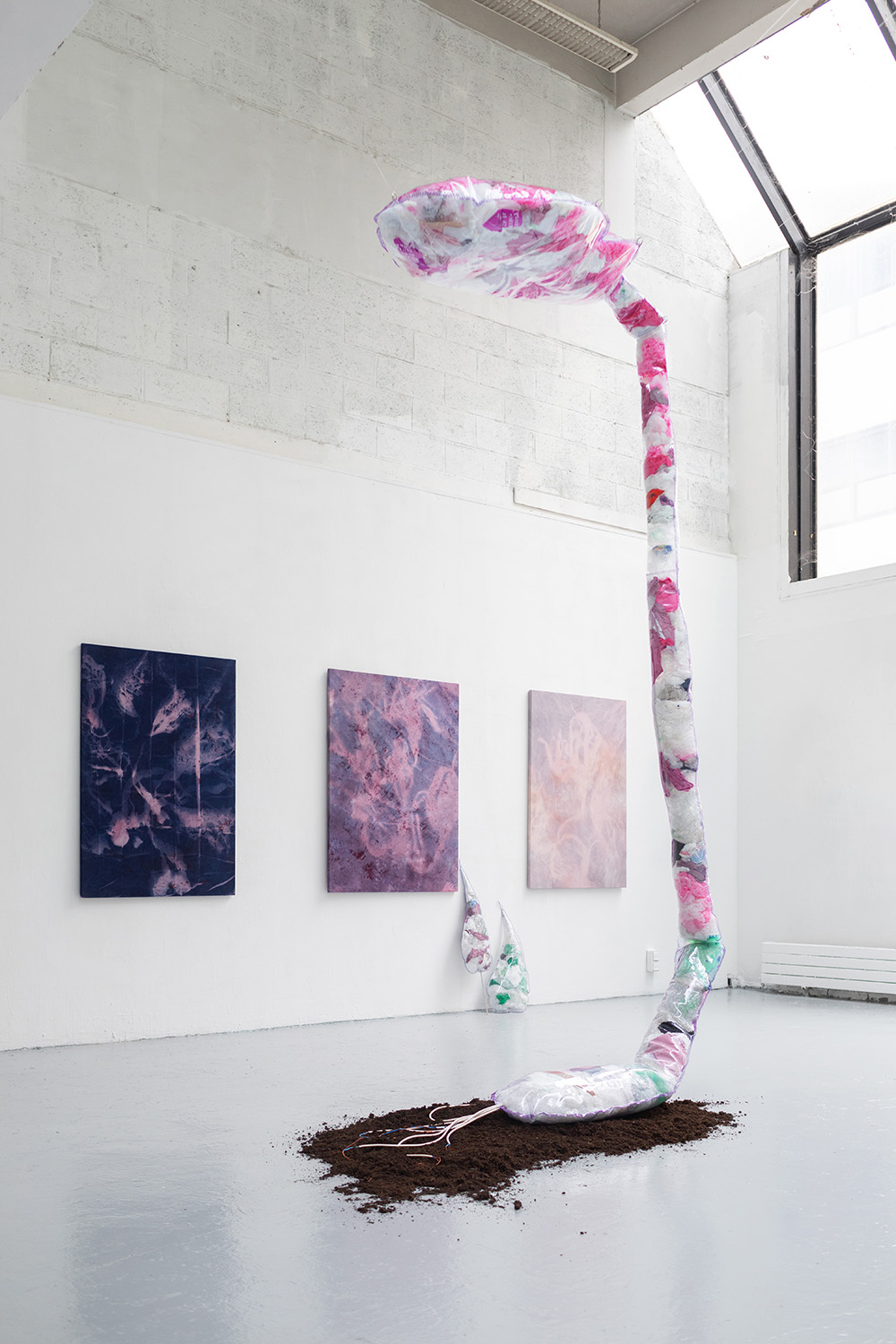
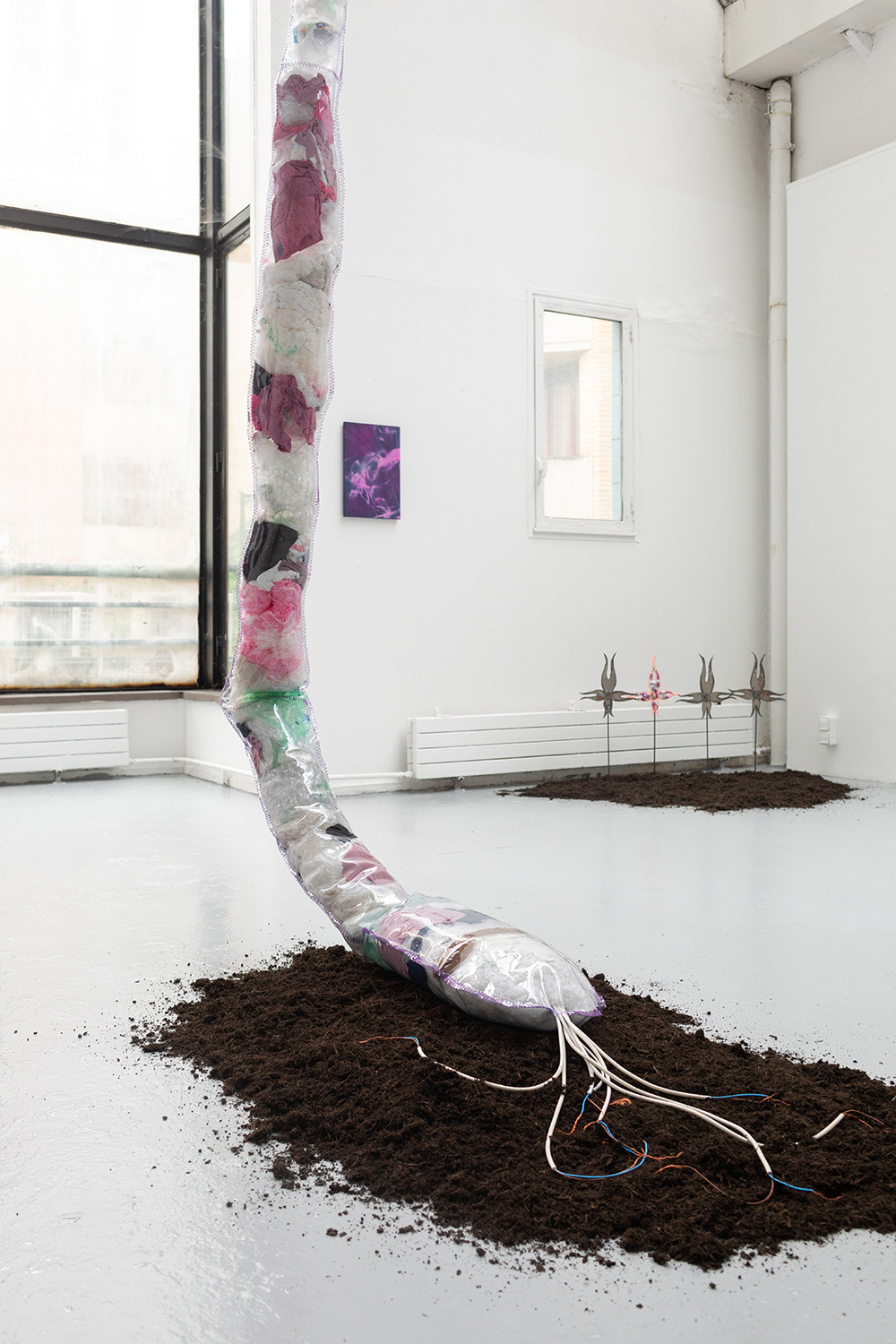
Emma Durovray paints, draws and sculpts imaginary plants that seem to come from the more or less near future. Their shapes and colors are the result of a subtle mutation between the plant species we all know and the industrial waste that increasingly marks our landscapes. Inspired by Léo Lionni's Parallel botany (1976), in which he describes a fantastic natural world, the artist imagines a hybrid flora in tune with the current ecological catastrophe. At the crossroads between a utopian vision, where nature persists, and a dystopian one, where nature is altered by pollution, Emma Durovray's images depict an earthly future that is disrupted but possible."
Camille Martin